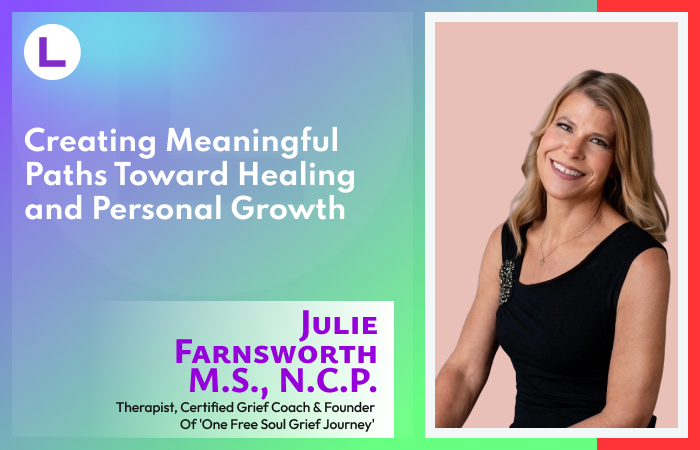
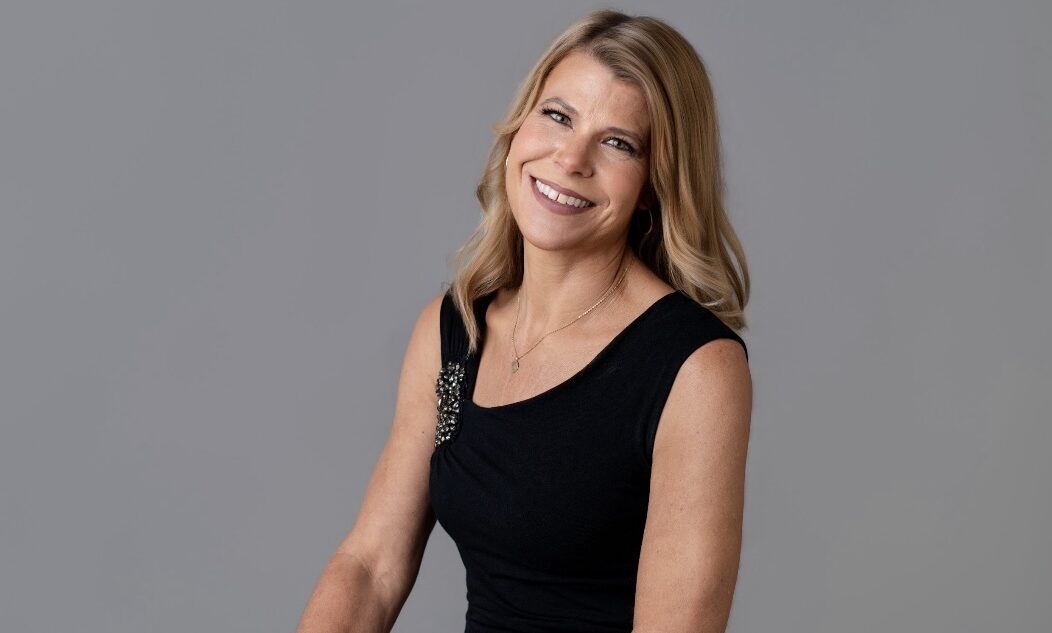
With more than three decades of experience in psychology, social work, and mental health, Julie Farnsworth has spent her career helping people navigate trauma, grief, loss, and difficult life experiences. Her work with survivors of domestic violence, children affected by childhood trauma, and families has shaped a deep understanding of how early experiences can influence mental health, relationships, and personal well-being.
In this exclusive interview with The Leaders 360, Julie reflects on the experiences that have shaped her approach to healing, including her work in trauma-informed care and training in EMDR, Mind-Body Medicine, and Neuro-Change. She also opens up about her own experiences with grief, loss, and vicarious trauma, and how those challenges transformed her understanding of self-care and healing.
Julie shares why community and connection matter in the healing process, what she has learned from her own journey, and how the loss of her sister ultimately inspired One Free Soul Grief Journey, allowing her to turn a deeply personal experience into a purpose centered on helping others.
A Journey in Mental Health and Healing
We were interested in learning more about Julie Farnsworth’s professional background, so we asked her to briefly introduce herself and share her professional journey.
Julie Farnsworth: Julie has been working within the mental health field since receiving her Bachelor’s degree in Psychology in 1993. Her primary experience in her undergraduate work was with survivors of domestic violence. After graduating, her work focused on childhood trauma with children in the foster care system. This led her to have a solid background in recognizing the impact that early childhood experiences have on mental health and relationships.
She later studied Attachment Theory and TBRI (Trust-Based Relational Intervention) and worked with parents to help them maintain and improve relationships and connections with their children. After raising two daughters, Julie returned to school and completed her Master’s degree in Counseling and Human Services. She took courses and was certified as a Neuro Change Practitioner.
Julie was also trained in EMDR and Mind-Body Medicine. As a lifelong learner, most recently, Julie was certified as a trauma-informed Grief Coach, which led to the start of her grief coaching business, “One Free Soul Grief Journey,” to honor the legacy of her sister.
Inspired by a Legacy of Compassion
We wanted to understand what inspired Julie Farnsworth to pursue a career in psychology, social work, and mental health, so we asked what initially drew her to these fields.
Julie Farnsworth: It all started for me when I was around 10 years old. I went on visits with my grandmother, who was a retired social worker at the time, to see women in the local nursing home who she visited with weekly. These were women that she found by asking who had no visitors. Being raised in the South, my grandmother’s love language was cooking and feeding people- she brought her “ladies” food that they requested every week. I was lucky enough to witness the joy that this simple act brought to them. This planted seeds for me to follow in her footsteps as I knew that this was something bigger than me that I wanted to be part of and something that I felt called to do.
The Power of Trauma-Informed Care
We were curious to learn more about Julie Farnsworth’s focus on trauma-informed care, so we asked what motivated her to specialize in this area.
Julie Farnsworth: Working in the field of social work and mental health over the last 30 years led me to focus on specializing in this type of care. During my career, I have been walking alongside others who have been at their lowest points in life. I have been able to see people start to heal and move forward after being stuck in dark places. The power of one person believing in you can truly change a person’s life. Many people that I have worked with never had anyone who believed in them before we started working together.
Understanding the Connection Between Mind and Body
We wanted to learn more about Julie Farnsworth’s professional development, so we asked what led her to become certified in EMDR, Mind-Body Medicine, and Neuro-Change.
Julie Farnsworth: After learning that our bodies and brains store traumatic experiences that can have implications on our overall well-being and health, I saw the need to learn ways to help people heal their brains and bodies. These are effective tools that can help people to release stored painful experiences so that they can move forward and begin to feel better. Neuro-change focuses on the brain’s ability to change and adapt through “neuroplasticity”. It examines past events and the influence that these have on the brain and, in turn, how these experiences shape people’s belief systems- about themselves, relationships, and the choices that they make. It is empowering for people to learn how their brains work and can change. Making connections to past events helps people to take control of their present lives so that they feel empowered to change, grow, learn, heal, and move forward in a healthy way. EMDR and Mind-Body medicine take this a step further by allowing the practitioner to guide clients to do this somatic healing work.
From Personal Struggle to Purpose
We were interested in understanding the challenges Julie Farnsworth has experienced throughout her career, so we asked how those experiences have shaped her.
Julie Farnsworth: After working in this field for half of my life, I started to struggle with my own mental health and well-being. Being the keeper of everyone else’s trauma, grief, and loss started to take a toll on me. I had heard about vicarious trauma, (which means that you start to absorb the pain of others that you have helped), but never realized that this can have such an impact on someone in a helping profession. I had reached a point where I had personal losses- my youngest sister had passed away from cancer at the age of 40, I had gotten divorced after a 25 year marriage, and my children were leaving to start their own lives in college- I felt utterly alone and was at an all-time low point in my life. All of this took a big toll on me and I ended up needing to be on the receiving end of services to help me. After spending some time in the hospital, I started to realize that I was just as important as my clients and I started to treat myself as such. I was able to get my life back on track and heal from my own trauma. I know now the importance of self-care after putting my own needs to the side for so long while helping everyone else. This ultimately led me to where I am now. I realized that I wanted to start my own practice of healing after knowing the things that helped me. I am passionate about sharing this knowledge with others.
The Healing Power of Community
We wanted to explore Julie Farnsworth’s perspective on healing, so we asked what role she believes community support plays in the healing process.
Julie Farnsworth: When we can come together as a community that values one another and allows for a safe space to share common stories and goals, it helps us to feel less alone and gives us the support that we need to heal.
Advice for the Healing Journey
We were curious to learn what guidance Julie Farnsworth would offer to individuals beginning their own journey toward healing and personal growth, so we asked what advice she would share with them.
Julie Farnsworth: My advice would be to realize that everyone’s healing journey is different. There is no set script to go by, but there are common experiences and feelings that we all share. It is important to honor your feelings while realizing there is no time line to “get over” your grief and loss. We don’t need to simply “move on” from the loss of someone that we love. We can carry their spirit forward in meaningful ways; this allows us to create a new life after loss while holding onto the love.
Healing can actually start to bring us joy if we can focus on things that surround us in our daily lives. Being intentional about what we are focusing on we start to realize that we can actually gain some gifts after grief and loss. The gifts of resilience, strength, compassion, empathy, and appreciation for little things in life such as nature, art, writing, reading, new hobbies, starting something in our loved one’s honor. My family started funding an “Art Cart” at the hospital in my sister’s name because it was something that brought her joy while hospitalized and it now honors her life and brings others joy. My sister is now helping to guide me on my healing journey to help others who are looking to do the same thing through “One Free Soul Grief Journey” which was named for her. My grandmother had always referred to her as a free soul and it stuck with her. I am carrying her with me after she used “One Free Soul” as the name for her jewelry business. I have repurposed the name for my grief coaching practice. I like to think that she is smiling down on me and happy about all of the people that we can help.
Also Read: