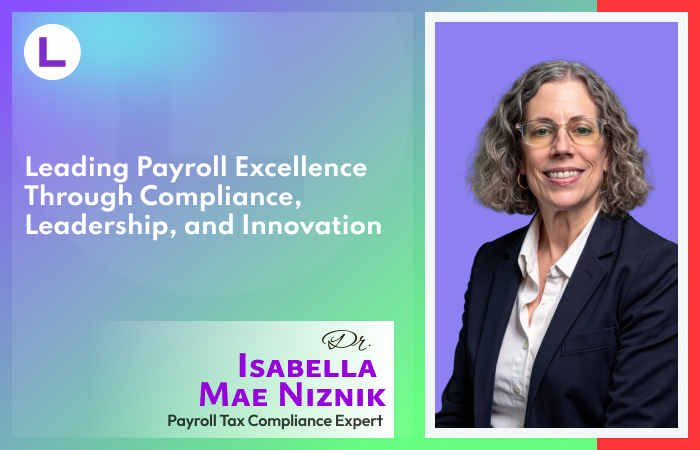
With more than three decades of experience in payroll operations, tax compliance, workforce management, and organizational leadership, Dr. Isabella Mae Niznik has built a distinguished career dedicated to accuracy, compliance, and continuous improvement. As a respected payroll and tax professional, author, and business leader, she has helped organizations navigate complex regulatory environments while developing stronger systems, processes, and teams. In this exclusive interview with The Leaders 360, Dr. Niznik reflects on her professional journey, discusses the evolving challenges of payroll and workforce management, shares valuable leadership lessons, and offers practical advice for the next generation of payroll, tax, and HR professionals.
A Career Journey in Payroll and Compliance
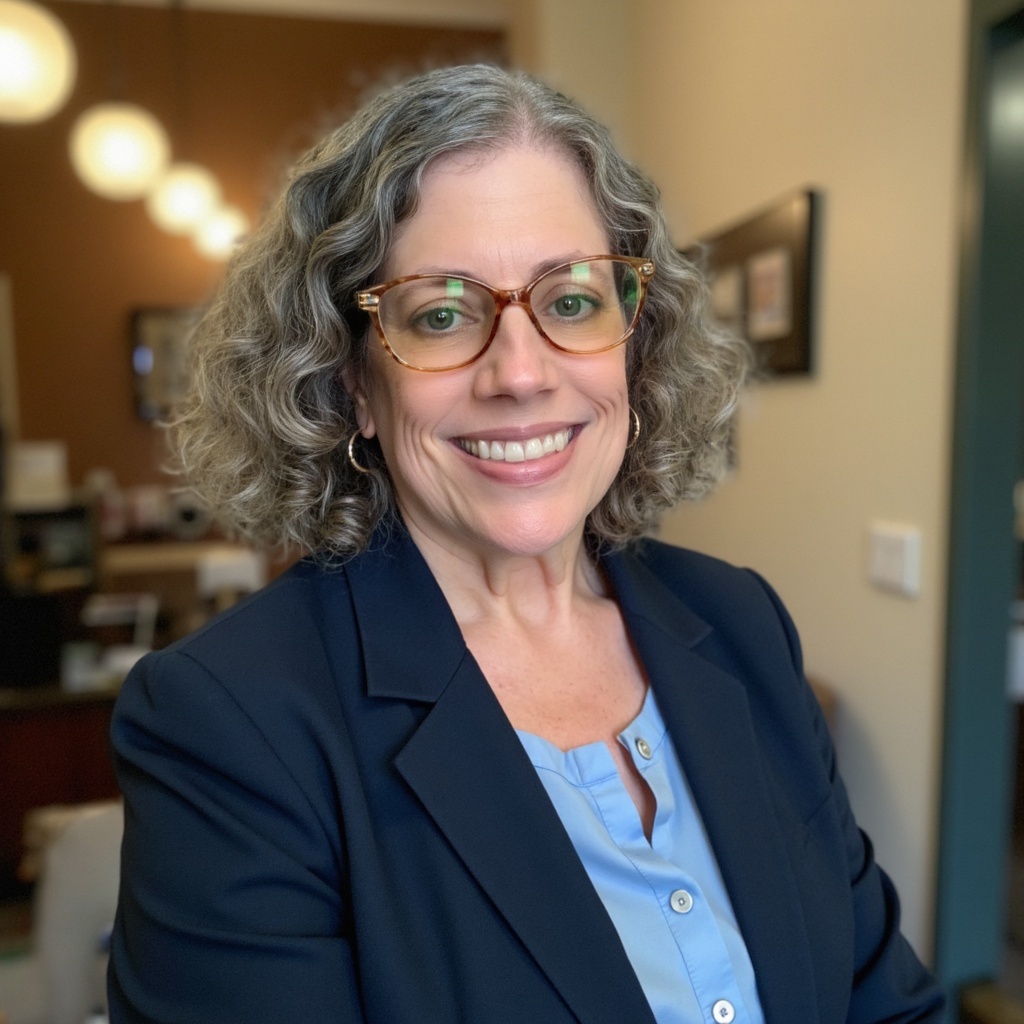
We were interested in learning more about the experiences that shaped Dr. Isabella Mae Niznik’s professional journey, so we asked her to introduce herself and share her early life and career path.
Dr. Isabella Mae Niznik: My name is Dr. Isabella Mae Niznik, an
d I am a payroll and tax leader with more than 39 years of experience in payroll operations, multi-state taxation, regulatory compliance, human resources, and payroll technology. I am currently the U.S. Payroll and Tax Manager at Rise, where I help strengthen payroll tax operations, compliance controls, system implementations, client onboarding, and reporting processes.
My early life taught me the importance of perseverance, personal responsibility, and hard work. Those values became the foundation of both my personal and professional journey. I learned that success is rarely the result of one defining moment. It is built through consistency, resilience, continuous learning, and the willingness to keep moving forward even when the path is difficult.
I began my career working directly with payroll processes and gradually developed specialized expertise in payroll taxation and compliance. Over the years, I have worked with organizations of different sizes, structures, and industries. My responsibilities have included payroll processing, federal and multi-state tax compliance, tax registrations, amended returns, agency notices, reconciliations, system implementations, internal controls, client services, and team leadership.
I have worked extensively with platforms such as ADP Workforce Now, ADP SmartCompliance, ADP MasterTax, UKG Ready, UKG Pro, PeopleSoft, Payworks, and Canada Pay Plus. Each position has expanded my understanding of how payroll connects employees, Human Resources, Finance, technology, government agencies, and organizational leadership.
While working and raising a family, I continued my education. In 1998, I made the decision to pursue postgraduate studies, and in 2004, I earned my Ph.D. in Business Administration. That journey was deeply personal. I wanted my daughters to see that education, perseverance, and ambition do not have an expiration date. I was fortunate to have the extraordinary support of my husband and family throughout that chapter of my life.
Beyond payroll, I am also a published author and the founder of IMN Storyworks LLC. Writing allows me to preserve stories, encourage others, and express the creative side of who I am. Whether I am solving a complex payroll tax problem, mentoring a professional, or writing a book, my goal is the same: to create something meaningful that helps others.
The Inspiration Behind Her Career
We wanted to understand what inspired Dr. Isabella Mae Niznik to build a career in payroll, tax compliance, and HR operations, so we asked about the motivation behind her professional journey.
Dr. Isabella Mae Niznik: I was drawn to payroll because it combines people, numbers, technology, law, and accountability. Payroll is one of the most personal responsibilities within an organization. Employees depend on receiving accurate and timely pay so they can support themselves and their families. Behind every payroll calculation is a real person with real financial responsibilities.
As I gained experience, I became especially interested in payroll tax compliance. Payroll laws are complex, and the requirements vary across federal, state, and local jurisdictions. I enjoyed researching regulations, resolving discrepancies, communicating with tax agencies, and developing processes that protected both employees and employers.
I also recognized that payroll professionals often serve as a bridge between Human Resources, Finance, Operations, Legal, technology teams, vendors, and employees. That connection inspired me to expand my expertise beyond payroll processing and into HR operations, system implementation, auditing, process improvement, and organizational risk management.
What has kept me in this profession for nearly four decades is knowing that the work matters. When payroll is accurate and compliant, employees may never see everything that happened behind the scenes—and that is often a sign that the payroll team has done its job exceptionally well.
Milestones That Shaped Her Growth
Throughout her career, Dr. Isabella Mae Niznik has achieved significant professional milestones, so we asked which experiences have had the greatest impact on her growth and development.
Dr. Isabella Mae Niznik: One of the most important milestones was developing expertise in multi-state payroll taxation. Managing federal, state, and local requirements taught me how to research complex issues, interpret agency guidance, recognize compliance risks, and create solutions that could withstand an audit.
Earning my Ph.D. in Business Administration was another defining milestone. It strengthened my ability to approach payroll not only as an operational function but also as a strategic component of business leadership, governance, risk management, and organizational performance.
Moving into leadership and management roles was equally significant. Leadership required me to go beyond completing the work myself. I had to develop procedures, train team members, establish controls, communicate risks to executives, collaborate across departments, and build processes that others could successfully follow.
My experience implementing and improving payroll technologies has also shaped my growth. Working with ADP, UKG, PeopleSoft, MasterTax, Payworks, and other systems taught me that technology is only as effective as the processes, data, controls, and people supporting it.
Another meaningful milestone was being recognized as a Global Payroll Titan Award finalist by PayrollOrg for two consecutive years. That recognition affirmed the value of the work I have devoted my career to performing—work that often happens quietly but has an enormous impact on employees and organizations.
Most recently, joining Rise as the U.S. Payroll and Tax Lead has allowed me to bring together my experience in payroll operations, tax compliance, system configuration, reporting-agent requirements, client onboarding, reconciliations, and compliance governance. It has given me an opportunity to help build stronger processes while contributing to the future of payroll technology.
A Proud Professional Achievement
We were interested in learning about the accomplishments that stand out most in her career, so we asked Dr. Isabella Mae Niznik to share the professional achievement she is most proud of and why it is meaningful to her.
Dr. Isabella Mae Niznik: I am most proud of the body of work I have built throughout my career and the trust organizations have placed in me to protect their employees and reduce compliance risk.
Being named a Global Payroll Titan Award finalist for two consecutive years is one of my proudest professional recognitions. It stands out because it represents decades of dedication to a profession that operates largely behind the scenes. Payroll professionals do not always receive public recognition, yet our work directly affects employees, families, organizational finances, and regulatory compliance.
I am also proud of the systems, reconciliations, standard operating procedures, training materials, dashboards, and controls I have created. These tools have helped organizations identify errors earlier, improve payroll accuracy, document accountability, strengthen audit readiness, and reduce the risk of penalties and amended tax returns.
However, my greatest achievement is not limited to an award, title, or system implementation. It is knowing that I have used my experience to help others grow. When someone I have trained becomes more confident, understands the reason behind a compliance requirement, or advances in their own career, I feel that I have created an impact that will continue beyond my own position.
Navigating Payroll and Workforce Challenges
As an experienced payroll and tax professional, Dr. Isabella Mae Niznik works closely with organizations on compliance and workforce matters, so we asked her to discuss the biggest challenges businesses face today.
Dr. Isabella Mae Niznik: One of the greatest challenges is the increasing complexity of payroll legislation. Organizations may be responsible for federal requirements as well as different state and local rules involving income tax, unemployment insurance, paid family and medical leave, disability programs, wage and hour laws, local occupational taxes, new-hire reporting, garnishments, and final-pay requirements.
Remote and hybrid work have added another layer of complexity. An employee’s work location may create tax registration, withholding, unemployment, labor-law, and reporting obligations in a new jurisdiction. Organizations need reliable processes for identifying where employees live and work and determining when those locations change.
Another major challenge is the assumption that payroll technology automatically guarantees compliance. Technology is essential, but it cannot replace knowledgeable payroll professionals, accurate system configuration, complete data, documented controls, and careful reconciliation. If a tax code is missing, an employer identification number is incorrect, or a wage-base rule is improperly configured, automation can process the error faster and across a larger population.
Data integration is also a significant concern. Payroll information often moves between HR systems, timekeeping platforms, benefit providers, financial systems, tax engines, banks, and government agencies. Each transfer creates an opportunity for missing, duplicated, or incorrectly mapped data.
Organizations must also overcome departmental silos. Payroll, HR, Finance, Legal, and technology teams cannot operate independently when their decisions affect the same employee data and financial transactions. Strong governance requires clearly defined ownership, documented approvals, reconciliations, and checks and balances.
Finally, organizations need to give payroll professionals an appropriate voice in strategic decision-making. Payroll should be involved before changes are implemented—not after a decision has created a compliance problem. Payroll is not simply an administrative function. It is a financial, legal, technological, and employee-experience function.

Leadership Lessons Learned Along the Way
We wanted to gain insight into the leadership lessons Dr. Isabella Mae Niznik has learned throughout her career, so we asked her to share the experiences that have shaped her leadership approach.
Dr. Isabella Mae Niznik: The first lesson I have learned is that leadership begins with listening. People need to know that their experience, concerns, and ideas are valued. A leader does not need to have every answer, but a leader must be willing to hear the facts, ask thoughtful questions, and make informed decisions.
I have also learned that accountability and compassion can coexist. Leaders must establish clear expectations and uphold compliance requirements, but they should also recognize that employees are human. Mistakes should be addressed honestly and corrected promptly, while also being treated as opportunities to improve processes and strengthen knowledge.
Another important lesson is that leaders must be willing to speak up when something creates risk. Payroll leaders sometimes have to deliver difficult messages, pause a process, or challenge a decision. Leadership is not always about agreeing with the room. Sometimes it is about respectfully explaining the law, documenting the risk, and protecting the organization from avoidable consequences.
I have learned that knowledge becomes more valuable when it is shared. Creating procedures, training team members, mentoring emerging professionals, and explaining the reasons behind requirements help build stronger and more confident teams.
Finally, leadership is not defined by a title. It is demonstrated through integrity, consistency, service, and the willingness to take responsibility. People remember whether a leader supported them, treated them fairly, and remained steady during difficult situations.
Advice for Future Payroll and HR Professionals
We were interested in hearing Dr. Isabella Mae Niznik’s advice for individuals looking to build successful careers in payroll, tax compliance, and HR operations, so we asked her to share her guidance for aspiring professionals.
Dr. Isabella Mae Niznik: My first piece of advice is to never stop learning. Payroll laws, tax requirements, workforce models, and technologies continue to change. Develop the habit of researching regulations, reading agency guidance, attending professional training, and asking questions when something is unclear.
Learn the reason behind the process. Do not be satisfied with knowing which button to select in a payroll system. Understand what the system is calculating, why a tax applies, how taxable wages are determined, where the information is reported, and what happens when the data is incorrect.
Build strong skills in payroll fundamentals, taxation, Excel, reconciliation, auditing, and data analysis. At the same time, develop your communication skills. Payroll professionals must be able to translate complicated regulations into clear language for employees, executives, clients, and cross-functional partners.
Document your work and maintain strong audit trails. If a decision, correction, or approval cannot be supported with documentation, the organization may have difficulty defending it during an audit or agency inquiry.
Do not be afraid to speak up when you identify a risk. Present the facts, explain the applicable requirement, describe the possible consequences, and recommend a solution. Your responsibility is not to create fear—it is to help the organization make informed and compliant decisions.
Find mentors, but also become a mentor when you are able. Share what you know and help create opportunities for others. There is room in this profession for people with different experiences, perspectives, and strengths.
Most importantly, remember that payroll is about people. Every calculation represents someone’s livelihood. Treat that responsibility with care, integrity, and respect. If you remain committed to accuracy, compliance, continuous learning, and service, you can build a meaningful and rewarding career while making an impact that extends far beyond the payroll department.