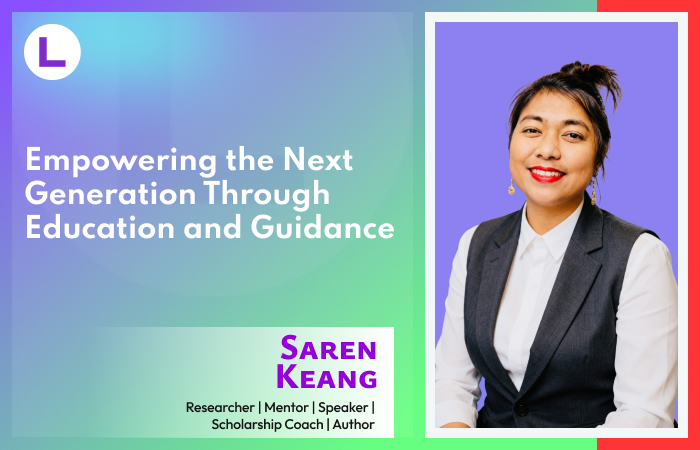
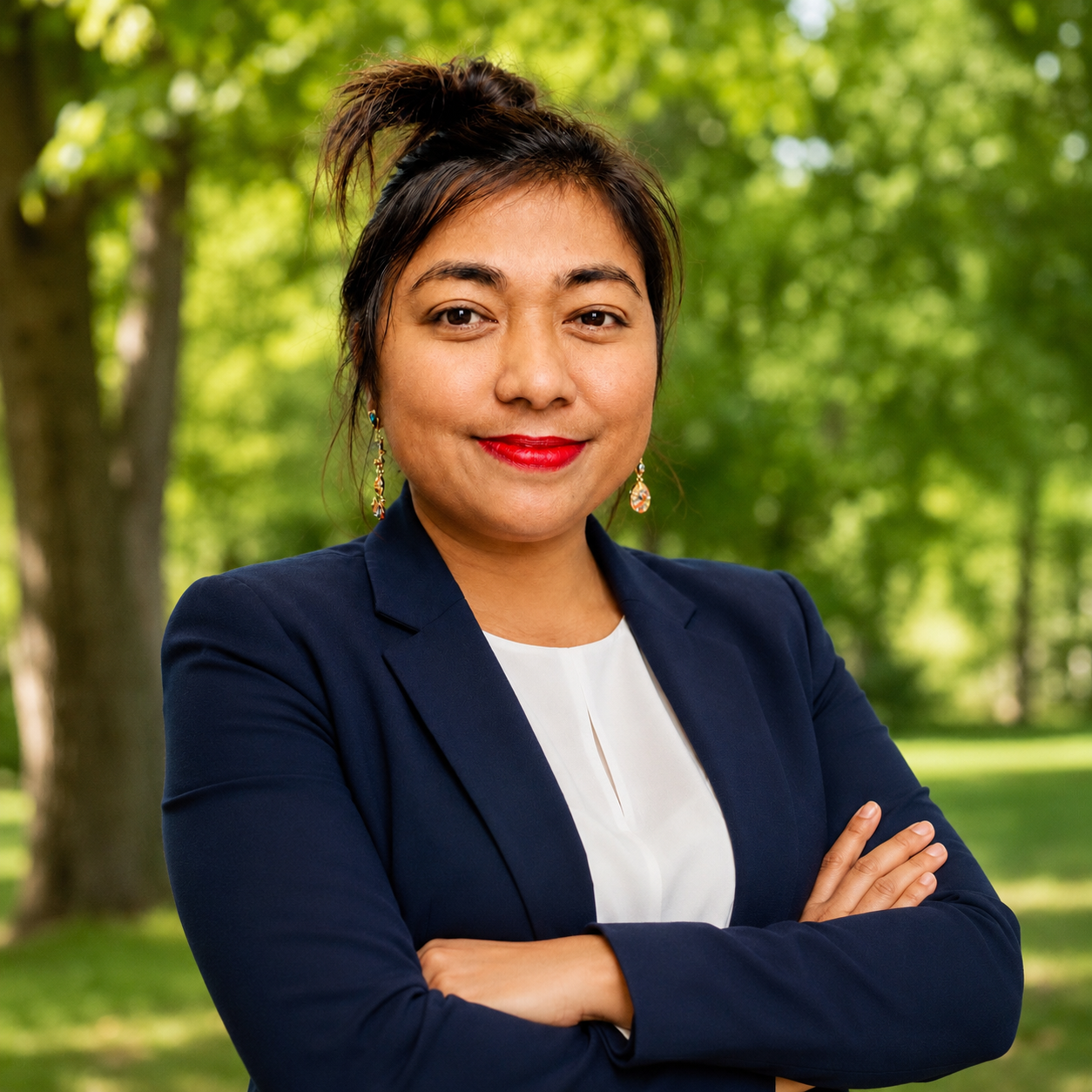
From a small village in Cambodia to earning three master’s degrees through prestigious scholarships, Saren Keang’s journey is a remarkable story of resilience, determination, and purpose. As a researcher, mentor, author, and scholarship strategist, she has dedicated her career to creating opportunities for others while championing education, empowerment, and social impact. In this exclusive interview with The Leaders 360, Saren reflects on the experiences that shaped her path, the lessons she has learned along the way, and her mission to help the next generation turn their aspirations into reality.
A Journey of Growth
We were interested in learning more about Saren Keang’s professional journey, so we asked her to briefly introduce herself and share what shaped her career path.
Saren Keang: This is Saren Keang, originally from Cambodia. I recently completed my master’s degree in Sociology at the University of Guelph in Canada. I also hold a bachelor’s degree in Asian Studies from Asian University for Women in Bangladesh, as well as two additional master’s degrees from Brandeis University in the United States, specializing in Sustainable International Development and Conflict Resolution and Coexistence. In total, I hold three master’s degrees.
I have demonstrated strong academic excellence throughout my educational journey, which has been fully funded through prestigious scholarships and fellowships, including the IKEA Fellowship and the Civil Society Leadership Award (CSLA).
I have held a variety of professional roles throughout my career, but the one I find most meaningful and rewarding is research. My journey as a researcher began with a summer research project in Cambodia, where my team and I interviewed Cambodian migrants who had returned from Thailand. We sought to understand the push and pull factors that compelled them to migrate to Thailand—sometimes through irregular channels—despite the significant risks they faced. This experience sparked my deeper interest in migration, mobility, inequality, and the lived experiences of marginalized communities.
That initial experience led to an opportunity to work as a Research Assistant on a project examining the everyday struggles of Cambodian and Burmese migrant workers in Thailand. My interest in migration research was also deeply personal. My older sister had migrated to Thailand and was experiencing significant challenges, and I wanted to better understand the country where she lived and the realities faced by migrants like her. What began as personal curiosity gradually developed into a professional and academic commitment to understanding migration, labor, gender, and social inequality.
My research interests were also shaped by another deeply personal part of my background. As a Cambodian, I grew up carrying the intergenerational legacy of the Khmer Rouge genocide, which profoundly affected my parents and their generation. During my final year of university, I therefore undertook an oral history project with a fellow student to document the experiences and survival stories of more than 20
survivors of the Khmer Rouge genocide. This project taught me the power of qualitative research—not simply as a method of generating knowledge, but as a way of preserving memories, amplifying marginalized voices, and ensuring that experiences that might otherwise be forgotten are documented for future generations.
These early research experiences opened doors to two significant research consultancy roles with BBC Media Action, a UK-affiliated organization, and Family Health International, a U.S.-affiliated organization. With BBC Media Action, I evaluated a project designed to increase young people’s awareness of sexual and reproductive health in Cambodia. With Family Health International, I contributed to research examining the causes and transmission of H5N1 in Cambodia, using multiple qualitative and participatory methodologies, including household mapping, photo-documentation, participant observation, and focus group discussions.
These experiences fundamentally shaped my development as a researcher. More importantly, they taught me that the research I find most meaningful is research that centers people’s lived experiences, gives voice to communities whose perspectives are often overlooked, and connects individual stories to broader social, political, and structural realities. Since then, research has remained at the heart of my academic and professional journey.
Inspired by Research and Mentorship
We were interested in understanding what inspired Saren Keang to pursue her work as a researcher and mentor, so we asked her about the motivation behind this journey.
Saren Keang: What inspired me to become a researcher was deeply personal. My interest in migration began with my own sister, who had migrated to Thailand for work. I wanted to understand why she made that decision, what her life was like there, and what challenges she and other Cambodian migrant workers faced. I therefore began by studying the experiences of migrants working in the same sector as my sister. What started as a personal desire to understand my sister’s experience quickly became a passion for research.
Through that first research experience, I discovered that I genuinely loved the process of asking questions, listening to people’s stories, uncovering new perspectives, and turning curiosity into knowledge. I also found the fieldwork itself incredibly rewarding. Traveling to different places, meeting people from diverse backgrounds, and learning directly from their experiences gave me a sense of purpose and intellectual excitement.
One of the things I value most about being a researcher is the opportunity to explore different questions across different fields. I have never been someone who wanted to be confined to a single subject. Curiosity and intellectual versatility are central to who I am. Throughout my research career, I have worked on a wide range of issues, including
migration, sexual and reproductive health, H5N1, water, sanitation and hygiene, climate change, contract farming, water scarcity, the role of social media in youth civic engagement, and gender equity in education, among others.
Although these topics may appear diverse, they are connected by my broader interest in people, inequality, social change, and the ways in which policies and institutions shape people’s everyday lives. I enjoy engaging with different communities, listening to perspectives that differ from my own, and learning how people understand and navigate the challenges they face. My ability to move across disciplines and engage with diverse groups has become one of my greatest strengths as a researcher.
Over the years, this passion has given me the opportunity to contribute to many research projects in collaborations with major international organizations and key government institutions in Cambodia, including the World Bank, UNICEF, Oxfam, the Ministry of Economy and Finance, the Ministry of Environment, and the National Assembly of Cambodia. Each experience has broadened my perspective, strengthened my research skills, and reinforced my belief that good research should not only generate knowledge but also help us better understand people’s realities and contribute to meaningful social change.
My commitment to mentoring is equally rooted in my personal experience. I grew up without a mentor or role model to guide me through the academic and professional opportunities I was trying to navigate. My parents did not complete primary school, and none of my siblings had attended college. In my village, the women I grew up around were largely housewives, farmers, or small-shop sellers. I had no one I could turn to for advice about university applications, scholarships, careers, or professional development.
Becoming the first person in my family to attend college and the first to hold a professional office job was an extraordinary achievement, but it was also incredibly lonely. I had to figure out almost everything on my own—how to apply to universities, find scholarships, build a career, navigate professional spaces, and believe that I belonged in those spaces in the first place. That experience shaped one of the strongest convictions of my life:
No girl should have to navigate her personal and professional growth journey alone.
That belief became the foundation for Dare and Dream Cambodia, a mentorship platform I founded in 2017 to support young women from rural Cambodia. Through the platform, I mentor female students in areas such as university applications, scholarship searches, interview preparation, goal setting, leadership development, and career
advancement. Our goal is not simply to help young women get into college or secure a job; it is to equip them with the confidence, knowledge, skills, and support system they need to become independent and empowered leaders in their communities and country.
What began in 2017 was an effort to ensure that girls from backgrounds like mine would have the guidance I never had and be able to grow. Today, I continue to mentor young women while expanding my work beyond Cambodia to support girls and young women from across Asia and Africa.
For me, mentoring is more than volunteering or professional service. It is deeply personal. Every time I help a young woman recognize an opportunity, believe in her potential, or take a step toward a future she once thought was beyond her reach, I feel that I am helping change the story for the next generation.
The Scholarship Mission
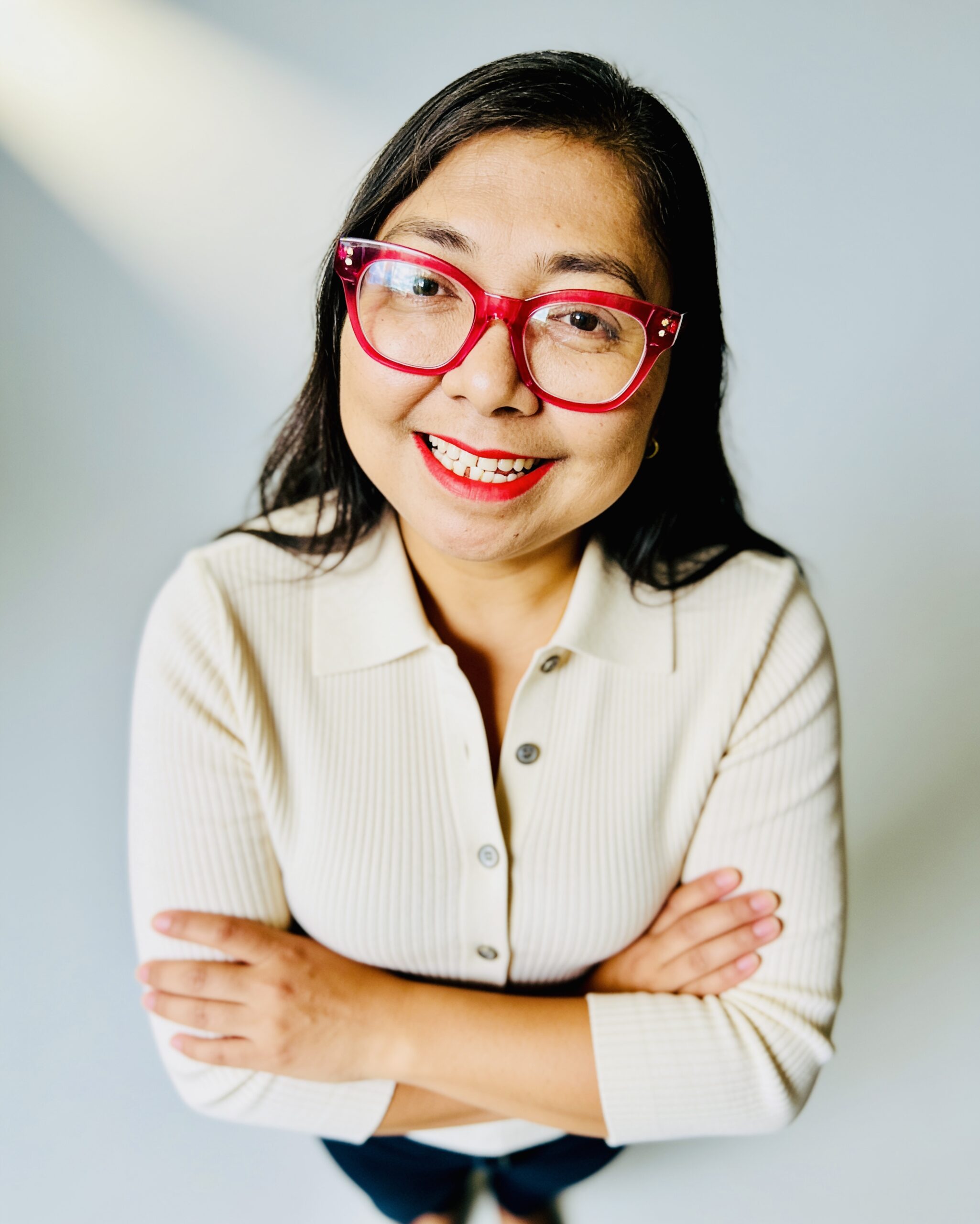
Given her success in securing prestigious scholarships, we wanted to learn what motivated Saren Keang to become a scholarship expert.
Saren Keang: Scholarships are the reason I am where I am today. I came from a family with very limited financial means and significant debt. We lived in survival mode, with no savings and little financial security. Pursuing higher education—let alone earning three master’s degrees—would have been impossible for me without scholarships. Scholarships did more than pay for my education; they changed the trajectory of my entire life. They gave me the opportunity to study in different countries, travel the world, meet people from diverse backgrounds, build an international career, and ultimately live a life I once could only dream about.
Because scholarships transformed my life, I feel a deep responsibility to pay that opportunity forward. I want students from low-income backgrounds, particularly those who may feel that a world-class education is beyond their reach, to know that financial circumstances do not have to determine the limits of their dreams. I want to help them find fully funded opportunities, develop competitive applications, and pursue the education and careers they aspire to.
I also understand how overwhelming and lonely that journey can be. I had no one to guide me. I had to learn how to search for scholarships, understand eligibility requirements, prepare applications, write compelling personal statements, and navigate international education largely on my own. There were countless moments when I did not know where to look, what to do next, or whether I was even on the right path.
I do not want the next generation to experience that same uncertainty and isolation.
I want to be the person I wish I had when I was beginning my own journey—the person who can say, “Here is where you should look. Here is how you should approach this application. Here is what you need to do next. And yes, you are capable of doing this.”
My background as a researcher has also strengthened my passion for scholarship advising. I genuinely enjoy researching funding opportunities, understanding scholarship criteria, identifying patterns in successful applications, and turning complicated information into practical strategies that students can actually use. But what makes this work truly meaningful to me is knowing that the information I share can potentially change the course of someone’s life.
When a student discovers a scholarship they did not know existed, submits an application they once thought was beyond their ability, and eventually receives that life-changing acceptance letter, I feel that I am witnessing the beginning of a transformation.
That is what motivates me.
Winning a scholarship can be so much more than receiving financial support. It can be the moment a young person’s world expands—the moment they gain access to education, international experiences, professional networks, and possibilities they never imagined for themselves.
That happened to me. Scholarships changed my story.
Now, I want to help change the story for the next generation.
Common Challenges
We were interested in learning about the common challenges students face when pursuing scholarships, so we asked Saren Keang to share her insights on this topic.
Saren Keang: Some of the most common challenges students face when pursuing scholarships include:
- Feeling overwhelmed by information because there are so many scholarships and opportunities to choose from.
- Not fully understanding the eligibility criteria and application requirements for different scholarships.
- Struggling to keep track of deadlines and application steps, which can lead to missed deadlines and incomplete applications.
- Doubting themselves and their abilities, believing they are not “good enough” to win a scholarship. This lack of confidence can cause students to delay applying, eventually miss the deadline, and then tell themselves, “I wasn’t good enough anyway.”
- Not knowing how to write a compelling personal statement or tell their story effectively because they focus too heavily on listing facts and accomplishments rather than communicating their experiences, motivations, values, and impact.
- Struggling to develop a clear and compelling research idea for a strong research proposal, or having too many ideas and not knowing which one to pursue (for PhD applicants).
- Starting the scholarship journey too late. Winning competitive scholarships often requires years of preparation. Students need time to build leadership experience, volunteer, contribute to their communities, and develop a strong profile beyond the classroom. Many students overlook these areas until they begin applying, only to realize that they have little to demonstrate under leadership, service, or community engagement.
- Failing to build relationships with professors and mentors early enough, leaving them without strong professional or academic references when scholarship applications require recommendation letters.
These are by no means an exhaustive list, but they are among the most common challenges I have observed throughout my work as a mentor and scholarship strategist. More importantly, these challenges are often preventable with the right information, strategy, preparation, and guidance.
The Stories Behind the Books
We were interested in learning more about Saren Keang’s books, A Long Way from Home and Beating the Odds, so we asked her what inspired her to write them and what message she hopes readers take away from both books.
Saren Keang: I published A Long Way from Home in 2021 with one central purpose: to inspire girls from backgrounds like mine to believe that their circumstances do not have to determine their future.
I wanted young women who grew up with very little to see themselves in my story—to see that it is possible to start from an extremely humble background and build a life you once thought was impossible. My journey took me from being a street-food seller in a small village in Cambodia to earning two master’s degrees in the United States, speaking on international stages alongside Cherie Blair, the former First Lady of the United Kingdom, and Akie Abe, the former First Lady of Japan, co-founding Dare and Dream Cambodia, supporting my family, and traveling the world.
But beyond the accomplishments, I wanted my story to send one powerful message: your starting point does not have to define your destination.
I wanted girls to open my book and see what I once could not see—a possibility for themselves. I wanted them to know that coming from poverty does not mean they have
to remain there, that growing up without connections does not mean they cannot build them, and that having no roadmap does not mean they cannot find their way.
If a girl who once sold street food in a small village in Cambodia could dream beyond the circumstances she was born into and build the life she imagined, then I want all of you, girls, reading my story to know: So Can You!
My second book, Beating the Odds, is deeply personal. It tells the story of how I navigated two major health challenges—bipolar disorder and kidney failure—and how I learned to keep moving forward even when life felt overwhelming.
In the book, I open up about experiences I had rarely spoken about publicly, including my psychotic episodes, a serious depressive episode, the years I spent undergoing dialysis, and the journey that eventually led to my kidney transplant. I also share practical lessons and strategies that helped me cope with these challenges and continue building my life despite them.
I wrote this book for people who are struggling—especially those who have reached a point where they feel exhausted, discouraged, or ready to give up. I want my story to remind them that a difficult chapter is not the end of their story. There can still be hope after despair, strength after weakness, and better days after the darkest ones.
I have experienced four psychotic episodes. I have fallen, but I have also gotten back up. I have fallen and risen. I have fallen and come back stronger. My health challenges did not disappear, but I learned that resilience is not about never falling—it is about finding the courage to rise again.
Despite living with bipolar disorder and kidney failure, I continued pursuing my goals. I earned three master’s degrees, worked to support my family in Cambodia, wrote two books, mentored young women, developed my work as a scholarship strategist, and continued speaking and sharing my experiences with others.
I am not sharing this to suggest that overcoming adversity is easy. It is not. I am sharing it because I want people facing their own battles to know that their circumstances do not have to be the end of their dreams.
If I could continue moving forward through some of the most difficult moments of my life, I believe you can keep going too.
My two books tell very different stories. A Long Way from Home is about where I came from and how much I have achieved. Beating the Odds is about what I have endured and how I kept going.
Two books. Two journeys. Two very different stories.
But they carry one message:
Never give up.
Balancing Multiple Roles
We were interested in learning how Saren Keang balances her work as a researcher, mentor, speaker, and writer, so we asked her how she manages these different roles.
Saren Keang: When you are truly passionate about something, you find a way to make time for it. I love all four of these roles—researcher, mentor, speaker, and writer—because each one gives me a sense of purpose and makes my life feel meaningful. At the same time, I recognize that balancing all four can be challenging.
At this stage of my life, I have decided to pause my work as a professional researcher and focus more intentionally on the other three roles: mentoring, speaking, and writing. I spent nearly ten years working professionally as a researcher, and I feel completely comfortable taking a step back from it for now. Research is still very much a part of who I am—I continue to research scholarship opportunities and strategies—but I am no longer pursuing research as a full-time professional role.
Instead, I want to use this chapter of my life to build my identity and brand as a speaker, mentor, and writer.
My speaking commitments are currently manageable. I appear on podcasts once or twice a month, which does not require a significant amount of preparation, and I conduct online webinars about scholarship strategies roughly once a month. This allows me to share what I know and connect with young people without taking too much time away from my other priorities.
Being a mentor is primarily about providing one-on-one consultation and personalized guidance. It is largely based on scheduling sessions around my availability, which gives me a great deal of flexibility. I also provide mentoring entirely online, which allows me to work comfortably from home.
Mentoring requires more dedicated time than speaking, but I have the flexibility to adjust the level of support depending on my availability and energy level. I can increase or reduce the number of sessions as needed, allowing me to maintain a balance while still providing meaningful support to my mentees.
Writing, however, is my everyday commitment. I try to write every day, even if the amount of time I dedicate to it varies. Writing has become a discipline for me—not
something I do only when I feel inspired, but something I intentionally make space for because I believe in the message I want to share.
Of course, passion does not eliminate practical responsibilities. Most of the work I do in these areas is not yet my primary source of income, and I still have bills to pay. That is why I currently work part-time as an interpreter to support my living expenses while I continue building this work. So, in practice, I am still balancing several roles, even without working professionally as a researcher.
It can be a lot. But because I genuinely care about what I am doing, I am willing to make the time and sacrifices required to make it work.
I do not have a particularly busy social life. I do not go out very often for entertainment; most of my free time is spent with my husband, Promise, who has been one of my biggest cheerleaders. He supports my ambitions and passions wholeheartedly and takes on more responsibility around the house, including cooking and cleaning, which gives me more time to pursue my work.
We also do not have children yet, so I recognize that I currently have a level of flexibility that may change in the future. When we have children, balancing these commitments will undoubtedly become more challenging, and I will need to adapt.
But for this season of my life, I am choosing to invest deeply in the things I care about. That sometimes means sacrificing social time, staying up late, or giving up a few hours of sleep during the week. I know that balance will look different at different stages of life, but right now, I am grateful for the freedom to pursue my passions.
Ultimately, I believe that when you genuinely love what you do, you become willing to make sacrifices, solve problems, and find a way forward—even when the path is difficult. You may not be able to do everything perfectly, but passion gives you the motivation to keep showing up.
If you love what you do deeply enough, you can move mountains to make it work.
Advice for Future Scholars
We were interested in learning what advice Saren Keang would give to students seeking opportunities to advance their education, so we asked her to share her guidance for aspiring learners.
Saren Keang: ● Start by believing that you are good enough. Confidence is the foundation of a strong scholarship journey. Do not disqualify yourself before the scholarship committee ever has the chance to consider your application.
- Start planning early. Build your profile long before scholarship deadlines arrive. Seek out leadership opportunities, volunteer, get involved in your community, and develop experiences that demonstrate who you are beyond the classroom.
- Be proactive and strategic in your research. Explore scholarship opportunities carefully and be selective about where you invest your time and energy. Do not simply apply to everything. Focus on opportunities that genuinely align with your background, goals, and strengths.
- Stay organized. Keep track of scholarship requirements, application steps, supporting documents, and deadlines. A great application is useless if you miss the deadline.
- Read. Read. Read. Read scholarship strategies, application tips, and success stories—but also read books, essays, and other well-written materials to strengthen your writing and storytelling skills. The better you become at telling stories, the better you can communicate the experiences and qualities that make you unique.
- Set yourself apart from the competition. Identify what is distinctive about your background, experiences, values, and journey. Then bring those elements to life in your personal statement. Do not just make your personal statement good—make it memorable.
- For PhD applicants, invest serious time in your research proposal. Develop your idea as thoroughly as possible and demonstrate why the research matters, what gap it addresses, and how it can contribute meaningful value to the scholarly community.
- Build genuine relationships with professors and mentors early. Give them opportunities to know you beyond your grades and the classroom. A strong reference letter comes from someone who can speak authentically about your character, potential, work ethic, and accomplishments—not simply someone who knows your name.
- Do not give up after your first few attempts. Rejection does not mean you are not good enough. Learn from each application, strengthen your profile, improve your strategy, and keep applying—especially when you know that a particular scholarship aligns strongly with your goals and is an opportunity you genuinely want.
Also Read:
Dr. Rfah Alyami: Shaping the Future Through Policy and Innovation