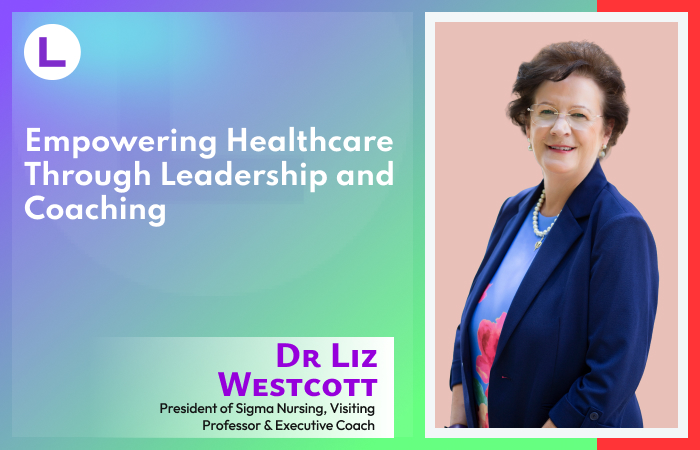
Strong leadership is built on purpose, compassion, and a commitment to helping others grow. In this exclusive conversation with The Leaders 360, Dr. Liz Westcott reflects on her remarkable journey from clinical nursing to global leadership, sharing valuable insights on coaching, healthcare, leadership development, and the importance of creating cultures where people can thrive. She also discusses the future of healthcare, the role of kindness in leadership, and the lessons that have shaped her career.
Professional Journey
We were interested in learning more about Dr. Liz Westcott’s remarkable career, so we asked her to briefly introduce herself and share her professional journey.
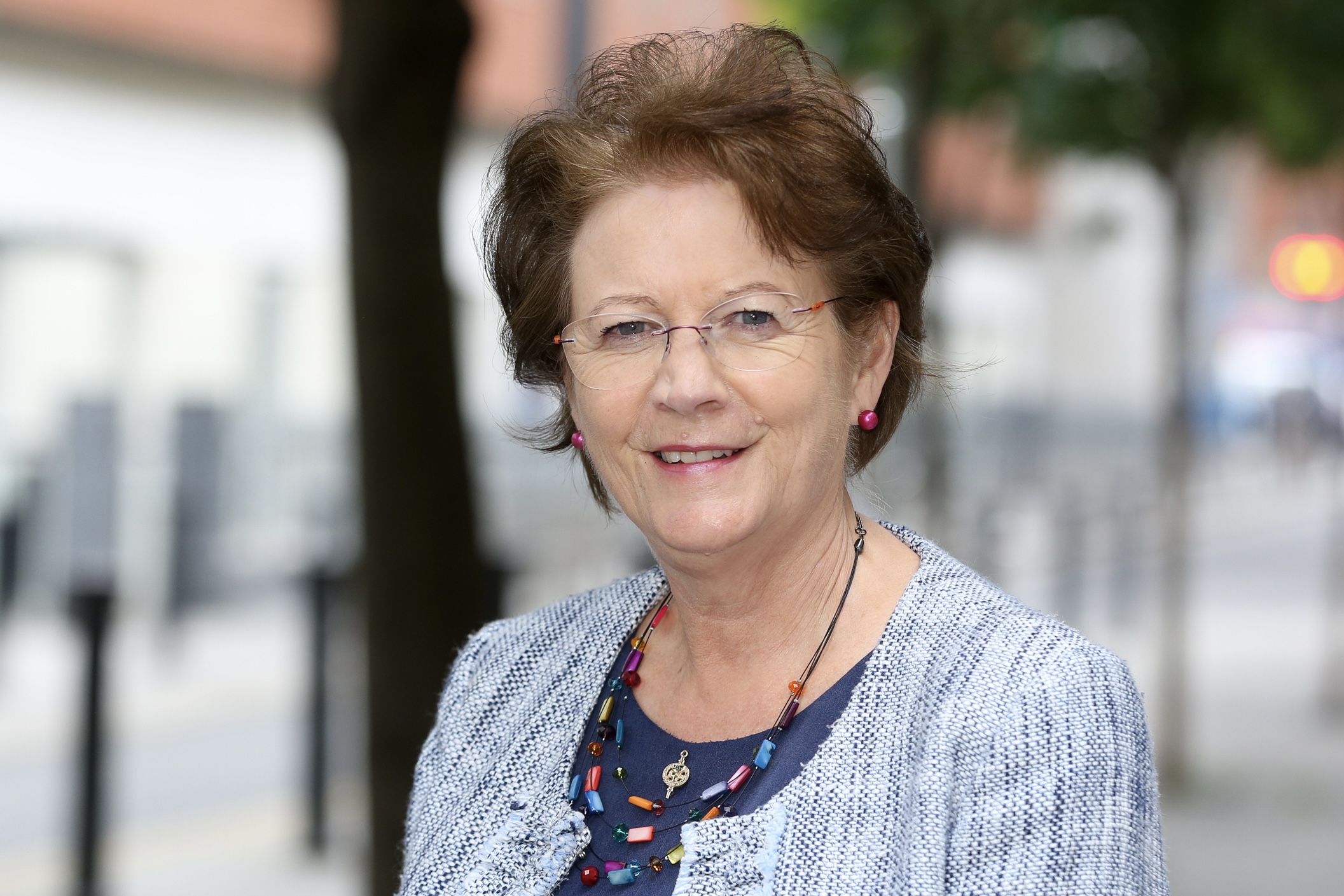
Dr. Liz Westcott: I am a nurse of 48 years and a senior academic and leader with over 36 years of experience working within Higher Education of which 15 years were at Faculty Executive Level.
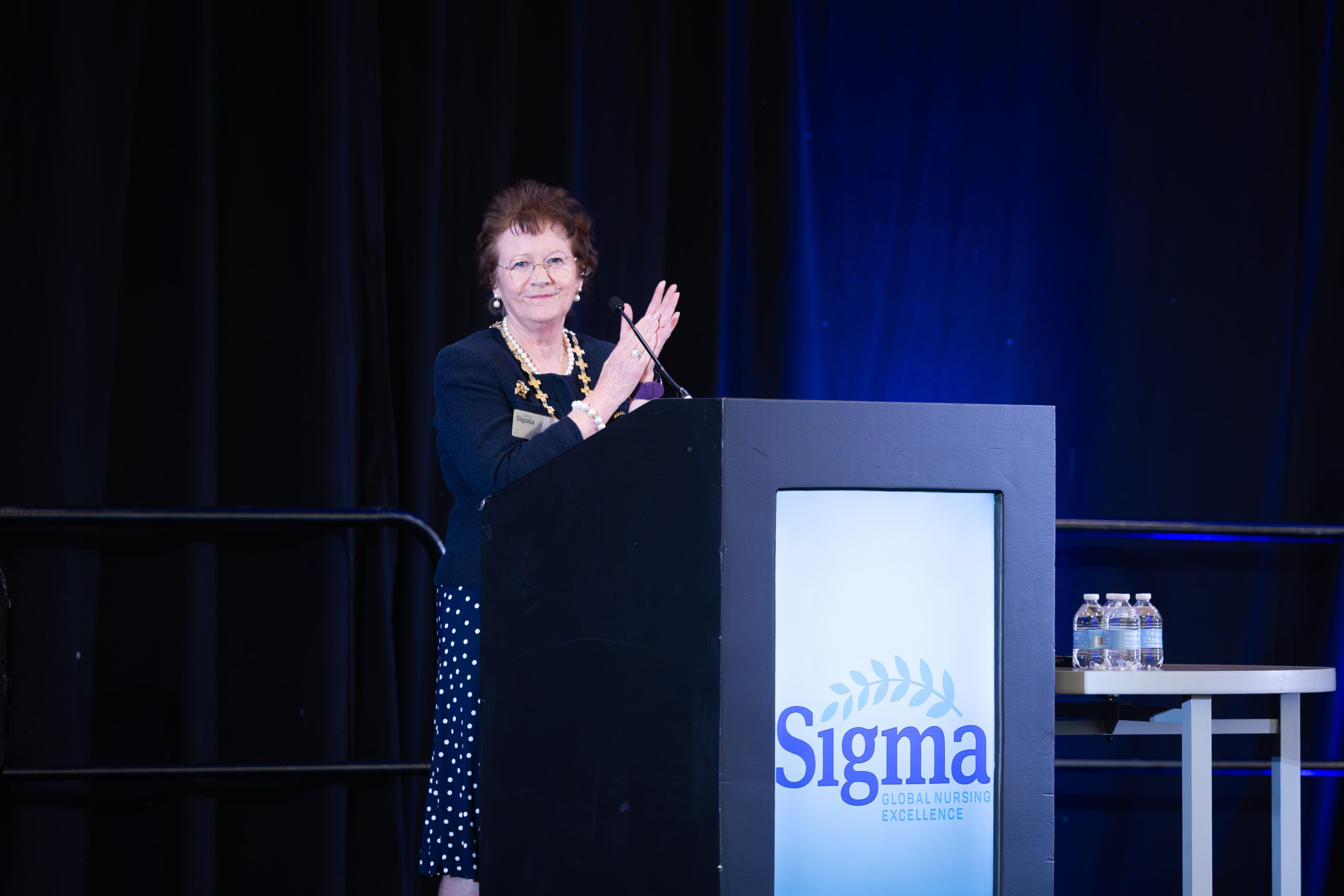
I am the current President of the Sigma Theta Tau International Honour Society of Nursing (Sigma Nursing), a global organization with members in more than 100 countries and a long-standing reputation for advancing nursing scholarship, leadership, and evidence-based practice worldwide. I am also currently a visiting Professor at Oxford Brookes University, UK, and am an Executive Coach and a Company Director.
I have extensive experience of academic and research staff management, leadership, financial management, strategic planning, working collaboratively with a wide range of external stakeholders, project management and strategic planning. I have been a coach for over 15 years.
I trained as a nurse in Oxford and in clinical practice and had a career in neuroscience nursing working at The National Hospital for Nervous Diseases and Great Ormond Street Hospital for Children, London and the Radcliffe Infirmary Oxford, rising to the role of Senior Nurse in neurosurgery. I was appointed as the first Lecturer Practitioner for neurology and neurosurgery in the United Kingdom in 1989.
The research I undertook investigating safe competency and staffing levels in Neurosurgery was used by neuroscience units in the UK to inform their future safe staffing levels. Having moved to Oxford Brookes University as a Senior Lecturer, I gained my Doctorate in 2015.
I was one of the first nurses to become an individual member of the Florence Nightingale Foundation in 2021 and is a Fellow of the Royal College of Surgeons, Ireland. I have also been selected for a Fellowship in the American Academy of Nursing.
Leadership, Coaching & Higher Education
We were curious to learn what inspired Dr. Liz Westcott to pursue a career in leadership, coaching, and higher education, so we asked what motivated this path.
Dr. Liz Westcott: I have always been guided by a genuine desire to make a positive difference to the people I work with. Teaching began for me in my second year of nurse training, and it quickly became a thread that has woven itself through every stage of my career. I never set out to become a professor, lead a department, or serve as President of Sigma. Instead, my journey unfolded because I kept saying “yes” to opportunities, even the ones that felt daunting, and trusted that growth often begins at the edge of comfort.
Across my career, I have focused on expanding access, strengthening the nursing workforce, and amplifying nurses’ voices. I am energised by intellectual challenge, collaborative relationships, and purposeful strategy, and I hold a deep commitment to equity and inclusion. I aim to lead with integrity and kindness, creating spaces where others feel supported to grow, contribute, and realise their potential. Championing diversity, equity, and professional excellence has been both a responsibility and a joy.
My involvement with Sigma has allowed me to bring together my transformational leadership experience with my passion for advancing nursing globally, particularly through an organization recognized internationally for its commitment to research excellence and leadership development. It has given me the opportunity to influence policies that support professional development and to help expand equitable access to research for nurses around the world. Being part of Sigma continues to be one of the most meaningful ways I contribute to the future of our profession.
Future Goals
We were interested in learning about Dr. Liz Westcott’s future aspirations, so we asked what goals she is currently focused on for the next phase of her career.
Dr. Liz Westcott: As President of Sigma, our current Call to Action, Lead Together, and our strategic framework Sigma Forward, will continue to guide my work as we strengthen Sigma’s role as a global leader in nursing scholarship, leadership development, and international collaboration. I will be committed to advancing global partnerships, supporting leadership development, and ensuring that nurses’ voices are heard in policy and practice.
I am also increasingly focused on supporting multi‑step, long‑horizon projects, strategic planning, leadership frameworks and executive development. I look forward to sharing my career development and lessons learnt through mentoring, coaching, lecturing and transformational leadership programmes and using them as a platform for the future development of nurses and coaches at whatever stage of their careers.
Leadership Philosophy
We wanted to understand how coaching has shaped Dr. Liz Westcott’s approach to leadership, so we asked how it has influenced her leadership philosophy.
Dr. Liz Westcott: Coaching has shifted my leadership from a model centred on expertise and responsibility to one grounded in self‑awareness, relational intelligence, cultural humility, and the belief that leadership is an act of enabling others to flourish.
Coaching has strengthened my belief that leadership is not about providing solutions but about creating the conditions in which others can generate them. This aligns with my long-standing philosophy of illuminating the path so others can walk it.
Coaching has amplified my long‑held belief in kindness, cultural humility, and caring cultures. It has shown me that relationships are the engine of leadership and that trust is built through presence, listening, and empathy. I have long recognised that people perform at their best when they feel valued, heard, and supported. This also aligns with
my commitment to psychological safety and my belief that leadership is fundamentally about how we make people feel.
Coaching has strengthened my conviction that reflection is not optional but it is essential. Having experienced many challenges, I have a commitment to learning from experience and sharing this with others rather than repeating it. Including a willingness to pause, think, and recalibrate rather than rush to action.
Challenges & Growth
We were interested in learning about the challenges Dr. Liz Westcott has faced throughout her professional journey, so we asked how she overcame them and what lessons she learned along the way.
Dr. Liz Westcott: Across nearly five decades in nursing, higher education, and global leadership, my professional journey has been shaped as much by challenge as by opportunity. Each challenge has asked something of me. Whether it’s a deeper self-awareness, a clearer sense of purpose, or a more intentional way of leading. And each one has, in turn, refined my leadership philosophy into what it is today: human-centred, reflective, and grounded in kindness.
Early clinical practice: learning to lead in complexity
I began my career in neuroscience nursing at the Radcliffe Infirmary in Oxford. A building deeply rooted in its city’s history. As a young nurse, the challenge was not simply mastering clinical skills; it was learning how to hold complexity without being consumed by it. I often felt the weight and anxiety of responsibility long before I felt the confidence to carry it.
What helped me overcome those early challenges was support from role models and curiosity. I asked questions, sought guidance, and learned to reflect after every shift. I discovered that leadership begins quietly. It’s demonstrated in how we listen, how we learn, and how we are there for others even when we are still finding our own footing.
When I stepped into the role of Lecturer Practitioner in neurology and neurosurgery in 1989, I entered uncharted territory. There was no model to follow, no predecessor to emulate. The challenge was to build credibility across two professional cultures, clinical and academic, each with its own expectations and challenges.
I listened deeply to and learnt rapidly from colleagues, co-creating solutions, and allowing the role to evolve organically rather than forcing it into a predefined shape. In hindsight, I was practising coaching long before I had the language for it. That experience taught me that leadership is not about having the answers; it is about creating the conditions in which answers can emerge.
As Head of Clinical Health Care, I faced the challenge of leading through organisational change. Restructuring, shifting policies, rising expectations — these pressures tested not only my strategic capability but also my commitment to caring cultures.
I learned that people do not resist change but they do resist feeling unsafe within it. Coaching became my anchor. I used it to help both myself and colleagues find clarity, agency, and confidence. I modelled calmness even when the system felt turbulent. I held firmly to the belief that kindness is not a soft skill but most importantly it is a leadership competency. This period shaped my conviction that culture is created through everyday behaviours, not grand statements.
Executive roles bring visibility, scrutiny, and complexity. The challenge was learning to sustain my own wellbeing while supporting others, making high-stakes decisions without losing sight of humanity, and navigating competing priorities with clarity.
Coaching transformed my approach. It helped me recognise my patterns, triggers, and blind spots. It taught me to lead with intentionality rather than reactivity. And it strengthened my reflective practice, a discipline that has become central to my leadership. Through coaching, I cultivated a grounded presence: calm, confident, and able to hold space for others even in moments of uncertainty.
Leading in global contexts – through Sigma, international conferences, and global networks – has introduced challenges of cultural diversity, logistical complexity, and relational nuance, but also highlighted Sigma’s unique position as a trusted international organization capable of convening diverse voices and shaping global nursing dialogue. I learned that global leadership requires humility, listening, and deep respect for difference.
I overcame these challenges by prioritising relationships. I listened more than I spoke. I sought to understand before being understood. And I embraced cultural humility as a leadership stance. These experiences reinforced my belief in nurturing global citizens in health and wellbeing and building leaders who can connect across borders with compassion and clarity.
Perhaps the most enduring challenge has been sustaining authenticity, purpose, and wellbeing across decades of leadership. Caring professions can be emotionally demanding; higher education can be bureaucratically heavy; global leadership can be relentless.
I overcame these challenges by committing to lifelong learning — including my doctorate in coaching — and by embracing vulnerability as a strength rather than a liability. I learned that resilience is not about endurance; it is about clarity, self-care, and reflective capacity. It is about knowing when to pause, when to recalibrate, and when to lead from a place of grounded intention.
Looking back, the challenges I faced were not obstacles to be conquered but invitations to grow. They taught me that leadership is not a role; it is a practice. It is shaped by how we think, how we relate, and how we care. Coaching has deepened that understanding,
helping me lead with greater self-awareness, cultural humility, and human-centred purpose.
My journey has not been defined by the challenges themselves, but by the person I became through them. A leader committed to kindness, reflective practice, and the belief that leadership is fundamentally about enabling others to flourish while balancing challenging decision making.
The Future of Healthcare Leadership
We were curious to learn about Dr. Liz Westcott’s perspective on the future of healthcare leadership and education, so we asked what trends she believes will shape the industry.
Dr. Liz Westcott: Future healthcare leaders must operate in increasingly complex systems marked by ageing populations, disruptive technologies, and workforce burnout. Leaders need flexibility, vision-setting, and continuous innovation to respond effectively.
AI is now embedded across scheduling, documentation, diagnostics, and population health management. Leaders must not only evaluate AI tools, manage compliance risks, and redesign workflows. However, it is essential that nurses are advocates and are at the forefront of developing and introducing such technology to ensure it is patient focused and ethically sound.
Future leaders must engage communities, strengthen public health messaging, and design care around patient community needs. This trend reflects a shift toward equity, inclusion, and community partnership.
Retirements, labour shortages, rising costs, and shifting staff expectations are reshaping leadership roles. Leaders must manage workforce retention, redesign roles, and build succession pipelines
Healthcare education is increasingly focused on systems thinking, complexity navigation, and cross‑disciplinary learning. Nursing leaders must understand interdependencies across policy, economics, workforce, the effects of climate change, and technology to ensure a successful future.
Advice for Future Leaders
We were interested in learning what guidance Dr. Liz Westcott would offer aspiring professionals, so we asked what advice she would give to those considering a career in coaching or academia.
Dr. Liz Westcott: Nursing, coaching, and academia are professions built on service, humanity, and intellectual curiosity. My advice would be to anchor yourself in what your values and motivations are and then what kind of impact you want to have. However, don’t be tempted to try and map your career out from the start but be well prepared and ready to say yes to challenges and serendipity when they arise.
Whether you are caring for patients, coaching leaders, teaching students, or undertaking research, self-awareness shapes your influence. Therefore, I would encourage emerging professionals to develop reflective practice, emotional resilience and have an awareness of personal patterns and blind spots.
Curiosity is the lifeblood of nursing, coaching, and academia. It keeps you humble, human, and adaptable. It is also the essence of inquiry-based practice.
Across my career, relationships have been the engine of progress. I would tell aspiring professionals to prioritise trust, develop essential listening skills and value relational intelligence as highly as technical skill.
Recognise also that expertise does not equal understanding. So treat kindness as a leadership competency, aim to create psychological safety wherever you work and try to model compassion even in high-pressure environments.
Kindness shapes learning, performance, and wellbeing. It is central to human-centred leadership. And remember that resilience grows through self-efficacy, not self-sacrifice.
I have committed to lifelong learning but have also committed to sharing knowledge and skills with others. I believe that lifelong learning is the hallmark of professional excellence. I am constantly amazed by how much your words matter to colleagues, students, patients and families.
My final piece of advice would be simple: Choose nursing, coaching, or academia only if you are prepared to evolve, and recognize that organizations like Sigma provide global platforms for that evolution—connecting professionals to international scholarship, leadership opportunities, and communities of practice. These careers will challenge you, stretch you, and change you. They will ask you to become more reflective, more intentional, and more human.
And if you embrace that journey, they will reward you with a lifetime of meaning, connection, and impact.
Also Read: