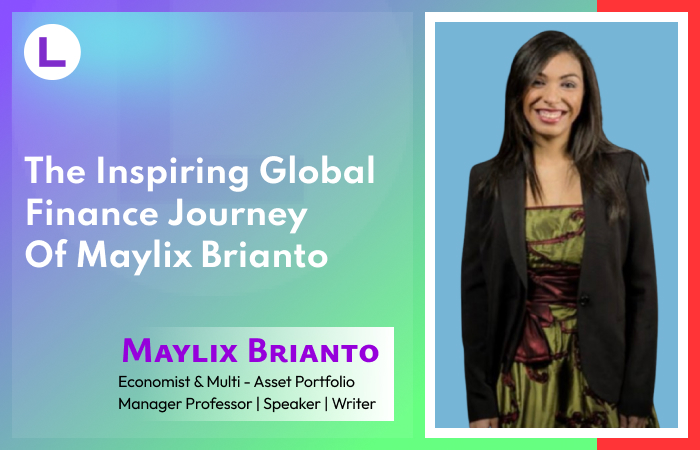
In an industry driven by numbers, Maylix Brianto chose a different language—one that speaks of purpose, trust, and long-term impact. From her early days at the Central Bank of Venezuela to advising sophisticated investors in Switzerland, teaching across Europe, and contributing to global conversations on sustainability and innovation, she has built a career at the intersection of performance and meaning.
Today, as a portfolio manager, professor of World Economy and Finance, speaker at leading platforms such as Building Bridges, contributor to financial media, and member of the The Quantum Finance Board, she is not just navigating markets—she is redefining the role finance plays in people’s lives.
Through her growing presence and voice, she is also helping a new generation engage with finance differently: not as something distant or complex, but as a tool to take action, build wealth, and shape their own future with intention.
Writing with Purpose: Phillip Leighton on History, Humanity, and Hope
From curiosity to conviction: where it all began
We were curious about Maylix Brianto’s background, so we asked her to share something about her early life.
Maylix Brianto: I often say my journey into finance didn’t start with a decision—it started with a feeling.
As a child, I used to visit my father at the Central Bank of Venezuela. I didn’t yet understand monetary policy or macroeconomic frameworks, but I could sense the importance of the work happening there. That environment sparked something in me very early: a desire to understand how economies function and how decisions shape societies.
I was naturally drawn to numbers, but also to stories—understanding patterns, connecting ideas. Economics became the perfect bridge between both worlds. I pursued a degree in Banking and Finance, and from early on, I looked beyond the classroom—participating in international conferences and representing my university and country abroad.
After graduation, I joined the Central Bank while completing a Master’s in Finance. That experience grounded me in rigorous analysis and research. But I wanted to go further, to explore the global dimension of finance.
This led me to France, where I completed an MBA in International Management. That transition marked a turning point—from public institutions to the private sector, from theory to application.
Today, my career spans portfolio management, education, and thought leadership. I teach World Economy and Finance between Geneva and Paris, I work closely with family offices, and I contribute to financial media. But beyond roles, what defines my journey is a clear purpose: to make finance more human, accessible, and impactful.
Where theory met reality—and stayed
We were interested in understanding how Maylix Brianto’s journey in economics and finance began, so we asked her to share how it all started.
Maylix Brianto: It began with curiosity, but it became a true vocation when I discovered its human dimension.
Economics gave me the intellectual framework to decode the world—how inflation, growth, and policy interact. But investment management is where those concepts became tangible. When I entered private banking in Geneva, I quickly realized that behind every portfolio there is a story, a family, a vision.
You are not simply optimizing returns—you are helping people make decisions that will impact generations. That realization transformed the way I approached my work. It made me more attentive, more responsible, and more intentional.
Over time, I developed a strong belief: finance is most powerful when it connects analytical precision with human understanding. That belief continues to guide every decision I make today.
The art behind the science of investing
We were interested in understanding how Maylix Brianto balances risk and return when managing diversified portfolios, so we asked her to share her approach.
Maylix Brianto: Balancing risk and return is both a technical discipline and a behavioral exercise.
It starts with a deep understanding of the client—what they want to achieve, what they can tolerate, and what they truly fear. Risk is not a universal concept; it is deeply personal. For some, it is market volatility. For others, it is the risk of missing opportunities or failing to preserve wealth over time.
Once this is clearly defined, I construct portfolios that are robust across different environments. Diversification is key—but it must be intentional. I combine traditional assets with alternatives such as private equity, infrastructure, and hedge funds to create complementary sources of return.
I also pay close attention to correlations, liquidity constraints, and macroeconomic cycles. But beyond structure, discipline is essential. A well-designed portfolio must be supported by a clear investment process and regular rebalancing.
Ultimately, success comes from consistency—staying aligned with the strategy even when markets become unpredictable.
Beyond service: building a strategic partnership
We were interested in Maylix Brianto’s perspective on what makes a multi-family office model effective for high-net-worth clients, so we asked her to share her insights.
Maylix Brianto: An effective multi-family office operates as a long-term strategic partner rather than a transactional advisor.
High-net-worth clients today expect more than performance—they seek alignment, transparency, and coherence across all aspects of their wealth. This includes investment strategy, governance, succession planning, and increasingly, sustainability considerations.
The strength of the multi-family office model lies in its independence and its ability to provide unbiased advice. But what truly makes it effective is its capacity to integrate all dimensions of a client’s financial life into one cohesive strategy.
Equally important is the relationship. Trust is built over time through consistency, honesty, and a genuine understanding of the client’s objectives. In this model, the human element is just as critical as the financial expertise.
David Faull on Leading with Passion, Purpose, and People in Hospitality
Selectivity, conviction, and purpose
To gain insight into her decision-making process, we asked Maylix Brianto what key factors she considers before recommending alternative investments.
Maylix Brianto: Alternative investments require a high level of rigor and selectivity.
I begin with a thorough due diligence process—analyzing the manager’s experience, track record, and alignment of interests. Understanding the strategy in depth is crucial, particularly in terms of how returns are generated and what risks are embedded.
Liquidity is another critical factor. Many alternative investments require a long-term commitment, so it is essential to ensure that this aligns with the client’s overall financial situation and objectives.
But beyond these technical aspects, I always ask one fundamental question: what role does this investment play within the portfolio? Whether it is for diversification, income, or growth, the purpose must be clearly defined.
Only when all these elements are aligned does the investment truly add value.
Navigating uncertainty in a world of noise
To understand the challenges behind portfolio management, we asked Maylix Brianto to share a significant experience and how she navigated it.
Maylix Brianto: One of the most significant challenges in today’s investment environment is managing information overload.
We are constantly exposed to market news, opinions, and data, which can create pressure to react quickly. However, not all information is relevant, and reacting impulsively can lead to suboptimal decisions.
To address this, I developed a structured approach based on reliable sources, disciplined analysis, and a long-term perspective. I focus on identifying the signals that truly matter and filtering out the noise.
Another key aspect is communication. During periods of volatility, clients need clarity and reassurance. Explaining the rationale behind decisions and maintaining transparency helps build confidence and trust.
In many ways, managing uncertainty is not just about managing portfolios—it is about managing expectations and emotions.
Staying ahead by staying engaged
To explore how she keeps pace with evolving markets, we asked Maylix Brianto how she stays updated on changing trends and regulatory shifts.
Maylix Brianto: Staying updated requires both discipline and curiosity.
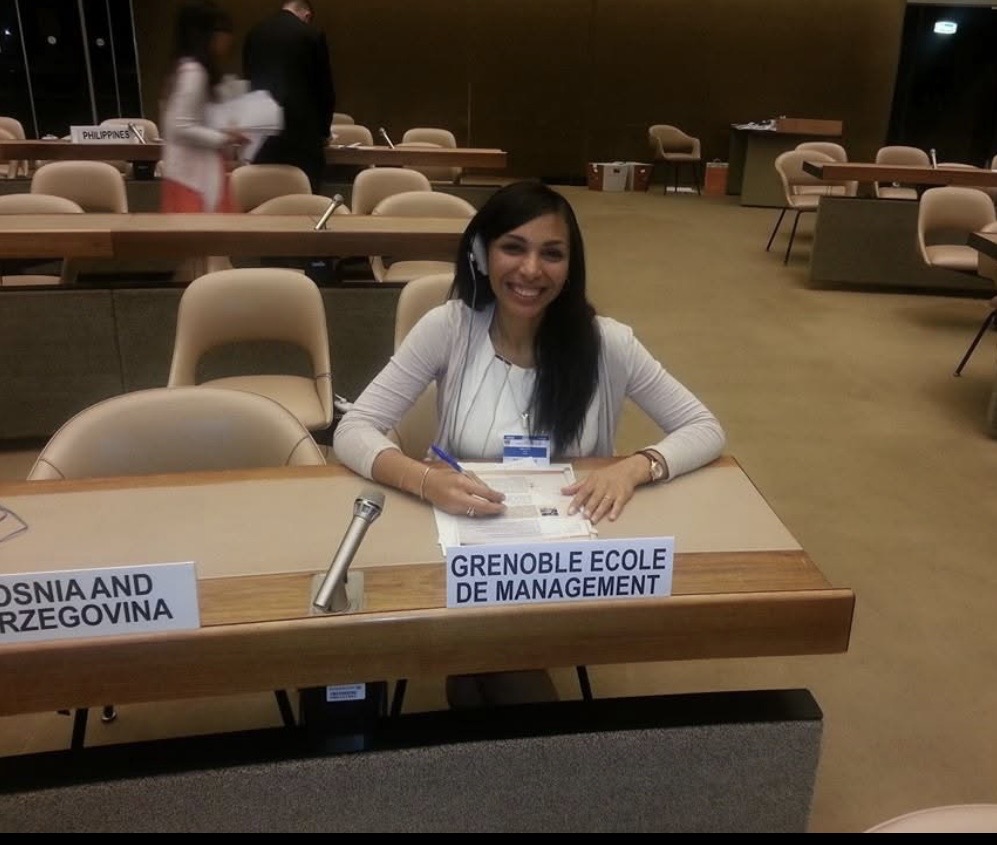
I continuously engage with the industry through conferences, panels, and professional networks. Events such as Building Bridges and collaborations with 100 Women in Finance provide valuable insights into emerging trends and global perspectives.
I also contribute to financial platforms like Rankia, which allows me to reflect on market developments and share my views.
Being part of The Quantum Finance Board further expands my perspective, particularly on how technology and innovation are shaping the future of finance.
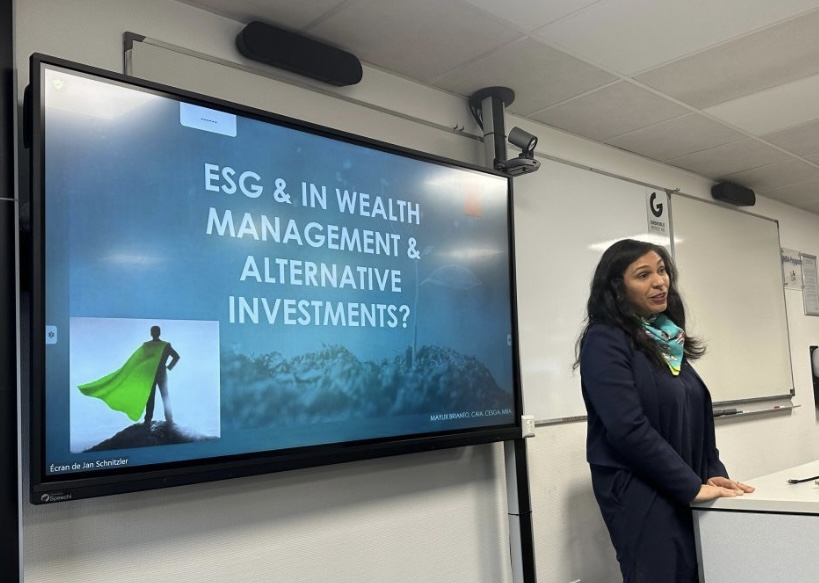
Finally, teaching plays a crucial role. It forces me to stay sharp, continuously update my knowledge, and translate complex ideas into clear, structured insights.
Trust as the ultimate currency
To understand her approach to building lasting partnerships, we asked Maylix Brianto how she manages and maintains long-term relationships with institutional partners and clients.
Maylix Brianto: Building long-term relationships requires a combination of technical expertise and emotional intelligence.
I prioritize understanding my clients beyond their financial profiles—learning about their values, priorities, and long-term vision. This allows me to provide more personalized and relevant advice.
Consistency and transparency are essential. Clients need to know that they can rely on you, especially during uncertain times. Regular communication and proactive updates help reinforce that trust.
I also see my role as a connector—bringing ideas, opportunities, and networks to my clients. Over time, this creates a relationship that goes beyond transactions and evolves into a true partnership.
Juan Napoli: Inspiring the Next Generation of AI Leaders
Humanizing finance in a technological world
To gain insight into her perspective as a speaker and educator, we asked Maylix Brianto what key message she prioritizes when discussing the future of finance.
Maylix Brianto: My core message is that finance must remain human, even as it becomes more technological.
As I speak at platforms like Building Bridges and 100 Women in Finance, and teach in Geneva and Paris, I emphasize the convergence of sustainability, innovation, and accessibility.
At the same time, I am deeply committed to using my growing social media presence to democratize financial knowledge. I aim to make finance more approachable and empower the next generation to take action—whether that means starting to invest, understanding risk, or building long-term wealth.
Because ultimately, finance should not be reserved for a few—it should be a tool that empowers many.

Building a career with intention
To offer guidance to the next generation, we asked Maylix Brianto what advice she would give to young professionals entering the investment advisory field today.
Maylix Brianto: My advice is to approach this industry with both ambition and humility.
First, invest in continuous learning. The financial world evolves rapidly, and staying relevant requires constant curiosity and discipline.
Second, build meaningful relationships. Your network will not only create opportunities but also shape your perspective and growth.
Third, develop resilience. Markets are unpredictable, and challenges are inevitable. The ability to stay focused and adaptable is essential.
And finally, never forget the human dimension. Technical skills are important, but your ability to understand people, build trust, and communicate effectively will define your success in the long run.
A Powerful Closing Perspective
“We don’t just allocate capital—we shape outcomes. And if we do it right, finance becomes more than performance; it becomes a force that empowers people, transforms lives, and builds a more intentional future.”